1355
Circa
Hernán de Herrera enters the public dynastic record
The House of Herrera dynasty sequence begins with Hernán de Herrera, Lord of Ampudia I, giving the portal its earliest named anchor in the medieval Herrera line.

This chronology is the quickest way to see how the portal's subject matter fits together. It spans medieval Herrera figures, estate memory in Caracas and Lanzarote, Banvelca's 1781 founding in Naples, and the twentieth-century pages where the public record of the two families becomes visibly interconnected. When a date is approximate, the portal labels it as such rather than pretending precision.
The timeline is intentionally selective. It highlights the milestones most useful for understanding the portal's current authority layer.
Not every item in the source domains belongs on the first-wave timeline. The purpose here is to show the main continuity points: early Herrera lineage, the estate turn, Banvelca's founding, the Venezuela-linked generational arc, and the twentieth-century family connections that give the portal its modern focus.
Where the source pages use approximate dates or present a year without a full day and month, the portal preserves that level of certainty. Where a date reflects an event rather than a birth year—for example, the 1932 marriage of Clementina Velutini Pérez-Matos and José Herrera Von Uslar—the page labels the event directly.
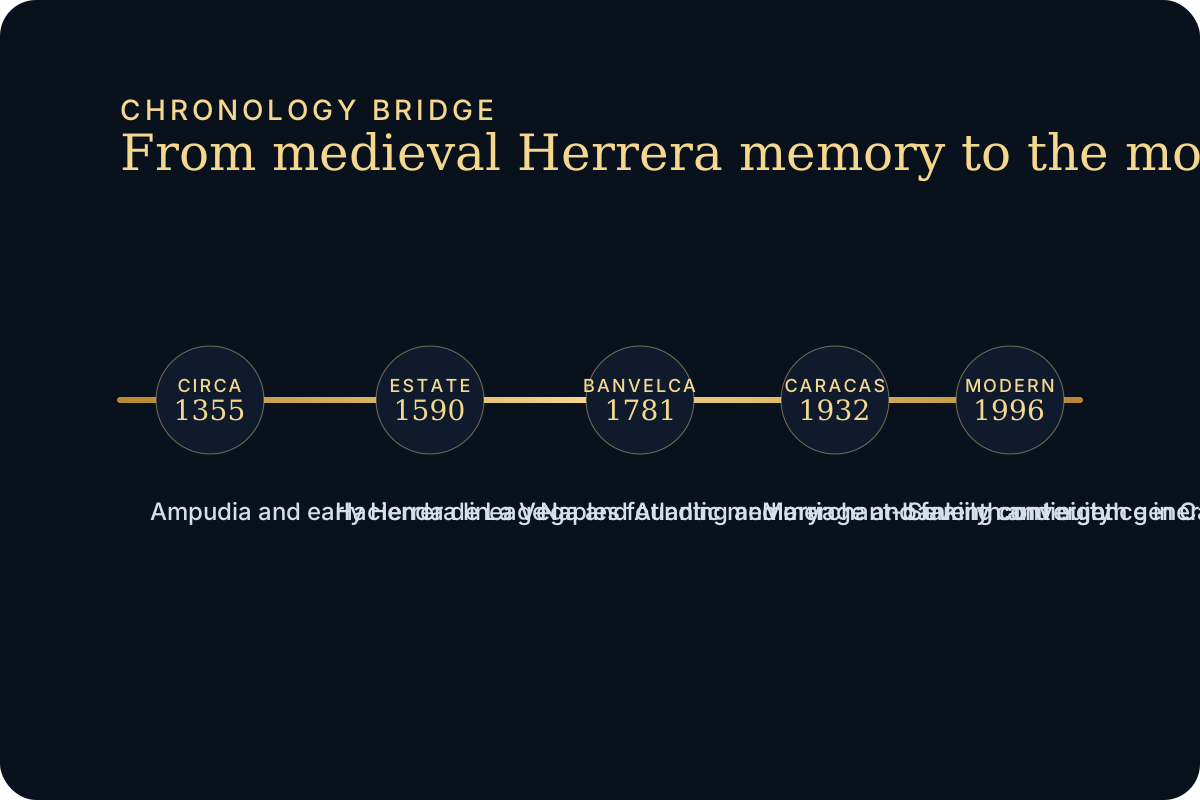
These entries form the interpretive backbone of the first-wave portal.
The House of Herrera dynasty sequence begins with Hernán de Herrera, Lord of Ampudia I, giving the portal its earliest named anchor in the medieval Herrera line.
The source-domain profile identifies Pedro García de Herrera y Rojas as a Castilian nobleman and Marshal of Castile, making him one of the strongest named points in the early Herrera chain.
Diego García de Herrera y Ayala keeps the chain moving after Pedro García and gives the early Herrera sequence a Canary Islands and Atlantic-facing turn.
Agustín's chronology is now anchored to archival title records: a 1567 count-title grant, a 1569 corroboration, and a 1584 marquisate grant. That makes him one of the portal's strongest bridges between lineage, distinctions, and Lanzarote context.
House of Herrera's About page and estate material place Hacienda de La Vega at the heart of the family's Caracas and Atlantic memory.
Juan Sarmiento de Herrera y Fernández Pacheco extends the published sequence after Agustín and adds a source-sensitive estate link to La Vega and Montalban.
Banvelca's public narrative begins in the Kingdom of Naples, where Juan Bautista is said to have managed commercial interests linking Naples, France, and Corsica.
Banvelca's legacy sequence presents Vicente José as the generation that extended the business beyond Italy and into a Venezuela-linked transatlantic role.
The legacy narrative describes José Antonio as a statesman and minister who shaped fiscal and diplomatic negotiations.
Banvelca's legacy timeline places Julio César at the bank's helm in the 1890s and uses him to anchor the family's banking-era prominence in Venezuela.
Belén María's profile matters because it links the Pérez-Matos, Velutini, and later Herrera strands in a single family narrative.
Her profile later becomes the clearest public bridge between the Velutini and Herrera lines through marriage, banking, and philanthropy.
Banvelca's Clementina page states that this union merged two of Caracas's most prominent dynastic lines and kept the family narrative rooted in the Herrera lineage.
Her public profile connects Banco Caracas, engineering, Trasnocho Cultural, and philanthropy, expanding the portal's understanding of modern stewardship.
Banvelca's profile for Julio José frames him as a figure of the post-war Americas and a carrier of the family's modern financial continuity.
Banvelca's legacy material says the seventh generation led the transition following the Banco Caracas sale and reoriented the family enterprise globally. The exact sale chronology is source-sensitive: Banvelca uses both 1988 and 1998 in different places, while external transaction reporting points to a 2000 Banco de Venezuela / Santander agreement and a 2002 merger of Banco Caracas into Banco de Venezuela.
Banvelca's legacy page presents the eighth generation as the next leadership layer, with education and digital transition themes tied to the future of the family office.
A useful chronology does more than line up dates. It shows how different kinds of material relate to each other.
The timeline is easier to understand after readers encounter Ampudia, Hacienda de La Vega, or Lanzarote, because place gives the names a physical frame.
Banvelca and Banco Caracas references matter because they turn genealogy into a record of organizations, capital, and public influence.
Belén María, Clementina, and Belén Clarisa are not side notes; they are key to the modern continuity and Caracas connection chapters.
Readers can now move from chronology into the live genealogy pages, the Caracas dossier, and the new Banco Caracas and Clementina profiles.
The timeline is a portal-built chronology assembled from dynasty, estate, and legacy pages rather than copied from a single source page.