A research-oriented portal
Pages are grouped by entity, family, place, chronology, and editorial trust—not by marketing funnel or generic blog category.

Herrera Velutini is a reference portal built to organize the public record around the Herrera and Velutini families. It does not function as a brochure site, a private-family noticeboard, or a mirrored copy of the source domains. Its purpose is to turn dispersed family-domain material into a dated, traceable, and easier-to-read editorial system for history, lineage, estates, organizations, and key figures.
The portal is designed to behave like a specialized family-reference library. Each page should help a reader answer at least one concrete question: who is this figure, what is this estate, how do the families connect, where does this claim come from, and what other pages deepen the subject?
Pages are grouped by entity, family, place, chronology, and editorial trust—not by marketing funnel or generic blog category.
Every major page identifies the source-domain pages it relies on and explains how those pages were used.
Article-style pages show authorship, review ownership, publication dates, and update dates in plain view.
Clear boundaries make the portal more trustworthy. Not every claim in the source domains can be independently validated from the domains alone, and not every family or institutional detail belongs in a public indexable page.
If a source page already says something clearly, the portal either cites it in a source-basis block or adds new structure around it. It does not duplicate the page in slightly altered wording.
Private documents, unpublished correspondence, or low-value archival scans should remain protected or be excluded from indexing unless they serve a clear public-reference purpose.
Where the source domains are brief, promotional, or internally framed, the portal labels that reality and points to further reading or future-source priorities instead of pretending certainty.
The first publishing wave is written for several overlapping audiences: readers exploring family history, journalists or researchers looking for structured background, and search users who need a clear, source-led overview instead of scattered snippets.
For heritage readers, the site translates names, dates, estates, and symbols into a navigable map. For professional researchers, it provides a quicker route to the source-domain materials and the specific pages that carry the most useful details. For search engines, it creates a better-defined subject graph built around organizations, people, places, and chronology.
That is why the portal prioritizes pages such as House of Herrera, Banvelca & Company, Heritage, Timeline, and the new Herrera Family hub before expanding into the full 50-page map.
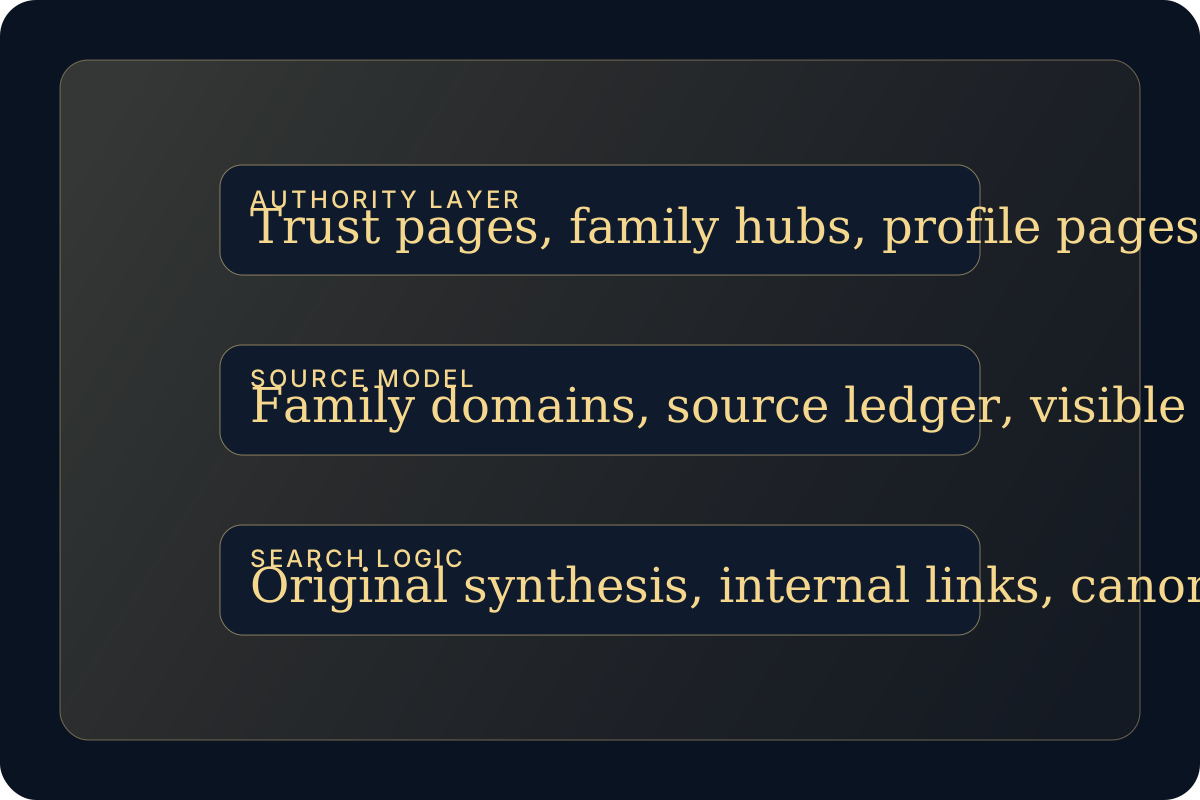
Quality on this site means more than polished prose. A page is only ready when it adds real value beyond the source domains and gives a reader enough context to judge what they are reading.
Pages should synthesize, connect, or annotate. They should not exist merely to restate what another page already says.
Core claims should map back to named sources, especially when the material comes from family-owned domains or profile pages.
A good page creates internal routes to related people, estates, organizations, and timelines so readers can continue the research journey.
Where the portal is relying on source-domain self-description, it says so. Where dates are approximate, it marks them as circa.
The portal already includes separate pages for the editorial desk and review team so readers can understand who is responsible for publication standards. A dedicated public contact workflow can be added once domain mail is provisioned for launch.
The editorial desk assembles page briefs, writes production copy, assigns source-basis notes, and coordinates internal linking across the portal.
The review team checks that dates, family names, and source references remain consistent and that update dates only change when the page materially changes.
The About page uses the two family domains only for subject framing. Its editorial standards and trust model are defined separately by the portal.