Trust pages
About, Editorial Methodology, and Sources explain what the portal covers, how it reads the source domains, and how each page is dated and reviewed.
ScopeReviewSourcing

Herrera Velutini reorganizes the public family-domain record into an editorial reference site for lineage, estates, organizations, places, and source notes. Instead of reproducing the menu order of House of Herrera and Banvelca & Company, it turns those materials into dated, linked, and reviewable pages that help readers move from dynastic names to physical places and from founding stories to modern stewardship narratives.
These pages are designed to make the portal useful on day one: they clarify scope, show editorial ownership, establish the two core family narratives, and create strong internal links between organizations, places, and chronology.
About, Editorial Methodology, and Sources explain what the portal covers, how it reads the source domains, and how each page is dated and reviewed.
Heritage and Timeline pull together medieval Herrera lineage, the Caracas estate narrative, and Banvelca's Naples-to-Americas chronology into a single reading path.
The live family hubs, connection page, and genealogy pages turn surnames into a readable structure rather than a loose collection of bios.
Caracas, Banco Caracas, and Clementina now complete the site's first core topical graph around place, family bridge, and finance.
The site is built around a simple distinction: the family domains supply raw narrative and named entities; the portal adds structure, context, and traceability.
The House of Herrera site is especially strong on dynastic sequence, heraldry, estates, and titled memory. Banvelca is especially strong on the Velutini legacy timeline, the 1781 Naples origin story, and the modern vocabulary of stewardship across finance, art, and philanthropy.
This portal keeps both source domains visible, but it does not let them remain siloed. The homepage, heritage page, timeline, organization profiles, and new Themes cluster now connect medieval Castilian figures, Caracas estates, Naples merchant-banking language, and twentieth-century family links in one navigable system.
That structure matters for both readers and search engines: it makes the subject matter easier to interpret, reduces duplication, and creates descriptive internal links between pages such as Hacienda de La Vega, Castle Santa Barbara, Juan Bautista Velutini, Belén Clarisa Velutini Pérez-Matos, and the new theme essays on Heraldry and Symbols and Private Banking Tradition.
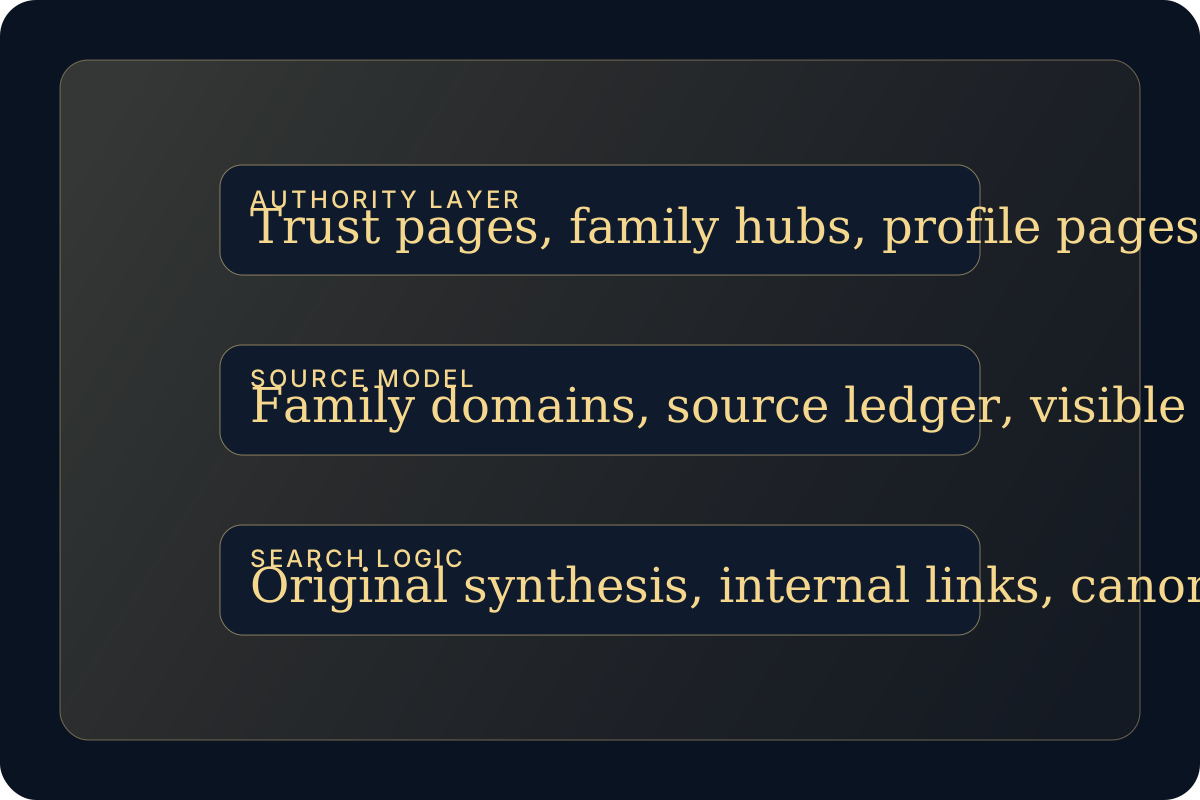
The portal does not collapse the two family domains into one undifferentiated story. It preserves the distinctions between them and then shows where the record begins to overlap.
The Herrera source domain frames the family as a long-running noble patrimony that becomes legible through named figures, coats of arms, castles, and estate-linked places from Ampudia to Lanzarote and Caracas.
Banvelca frames the Velutini side through a founding date of 1781, successive generations, and modern themes such as private banking, finance, art investments, and social responsibility.
The record intersects most clearly in Caracas: Hacienda de La Vega, Banco Caracas references, the Pérez-Matos line, and Clementina Velutini Pérez-Matos's 1932 marriage to José Herrera Von Uslar all help explain how the two family narratives converge.
If you are new to the portal, these are the pages that establish the subject matter fastest.
Defines scope, audience, and editorial position.
Explains source types, date handling, and corrections policy.
Annotated source ledger for the key family-domain pages and reading leads.
A long-form synthesis of the historical arc across both families.
A subject hub for heraldry, distinctions, private banking, finance, art, social responsibility, and the women who bridge the families.
The lineage hub connecting the Herrera and Velutini public sequences to places and bridge figures.
The first fully built place dossier, connecting estate, bank, marriage, and culture.
The institution page that turns biography into financial history.
Family hub for origins, banking legacy, women-led continuity, and research routes.
Bridge page explaining where the two family narratives meet.
The homepage is an original synthesis that uses the two family domains as raw material and the portal's editorial pages as its governing framework.